April 3, 2026
6 Advantages of CIP Automation for Food & Beverage Processing
What automated CIP systems deliver beyond basic sanitation, and why it matters for your facility.
For decades, Clean-in-Place (CIP) systems were sanitation tools. Necessary, but rarely treated as part of core operations. That assumption no longer holds. Manual systems struggle to meet today’s regulatory, operational, and reporting requirements.
CIP automation is changing how food and beverage manufacturers handle uptime, sustainability, compliance, and audit readiness. Regulatory bodies such as the FDA and GFSI now expect repeatable sanitation processes as a baseline for food safety.
In parallel, sustainability frameworks, including the Global Reporting Initiative (GRI) and CDP require measurable reductions in water, energy, and chemical use.
These combined pressures reflect a shift in how the industry is viewed. Clean-in-Place automation is now treated as operational infrastructure.
Why CIP Automation Is Becoming a Strategic Priority
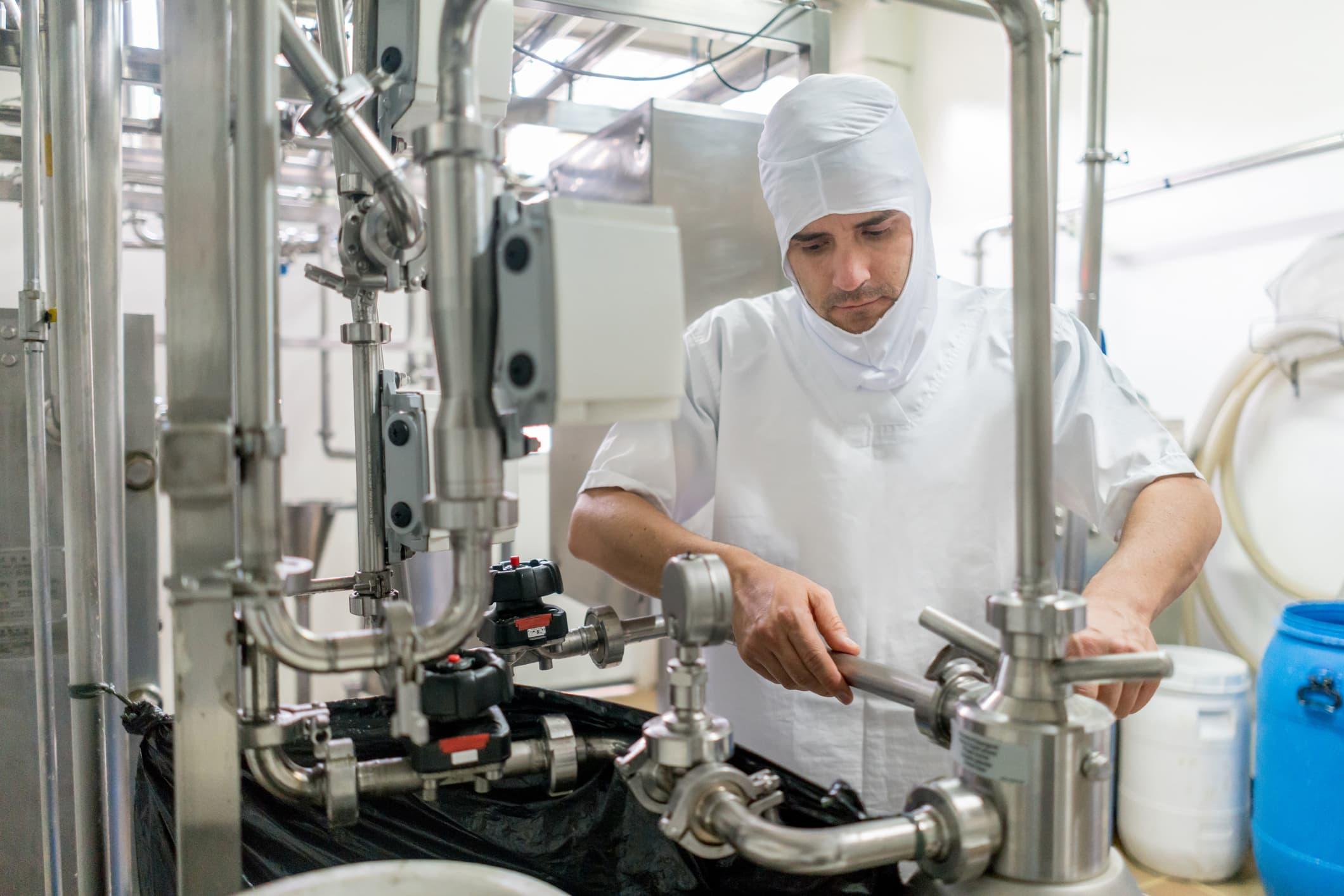
Sanitary systems affect more than cleanliness. In modern facilities, they influence production continuity, quality assurance, and regulatory confidence.
With PLC-based CIP controls, cleaning cycles can be programmed, monitored, and repeated consistently. This changes CIP from a static routine into a controlled process, reducing execution variability across shifts and products.
Manual and semi-automated approaches rely heavily on paper records and operator judgment.
That dependence creates gaps in documentation, limits visibility into performance, and makes scaling difficult as product complexity increases.
As allergen changeovers and throughput demands rise, inconsistent cleaning execution becomes an operational risk.
6 Core Advantages of CIP Automation in Food & Beverage Operations
CIP automation extends well beyond basic sanitation. Facilities that adopt automated systems see measurable effects across operations, quality, sustainability, compliance, and workforce safety.
1. Boosting Operational Efficiency and Production Uptime
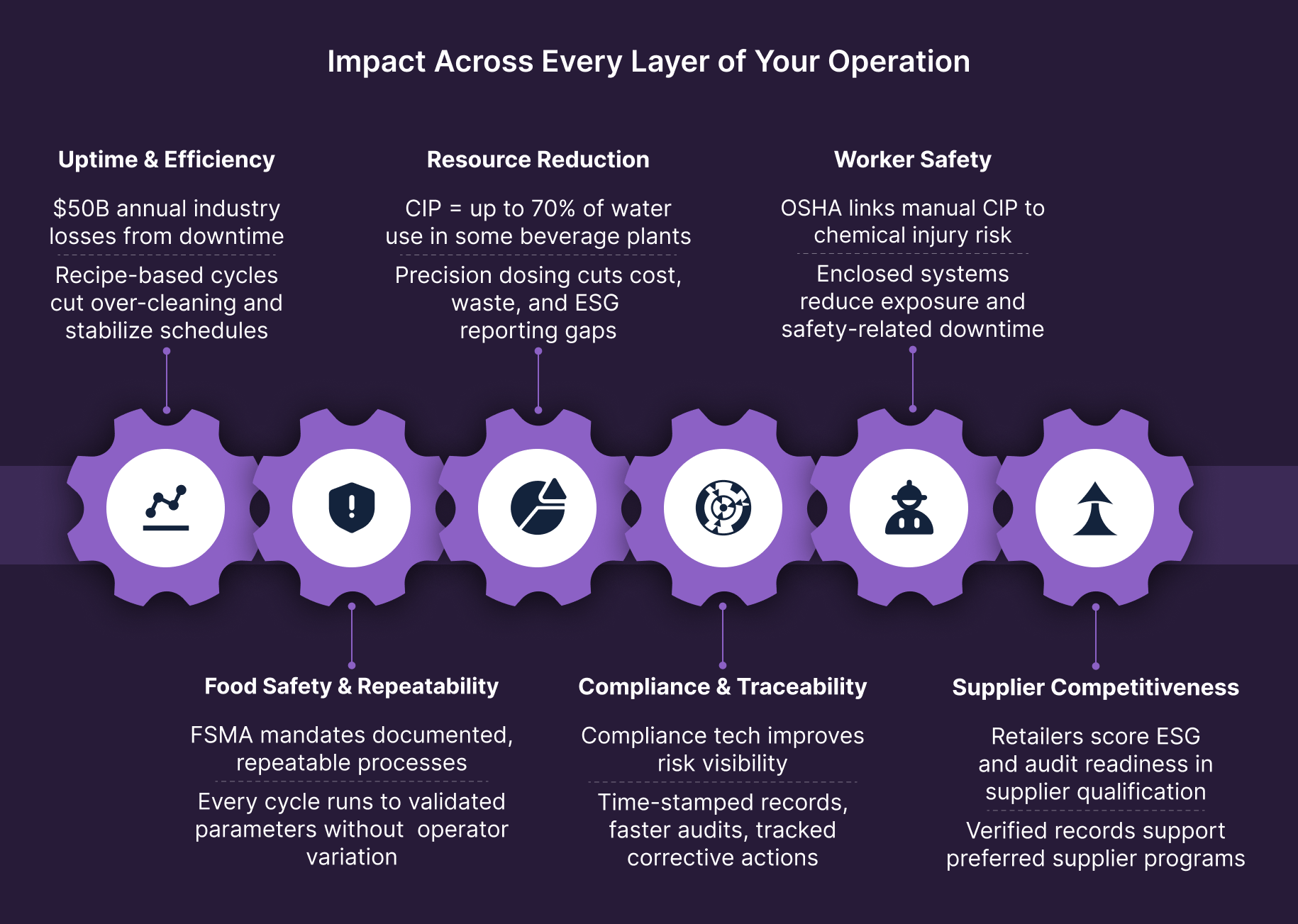
Downtime carries a direct cost. Unplanned CIP cycles interrupt production, while scheduling cleaning still reduces available operating time. Together, they lower throughput and asset utilization, contributing to an estimated $50 billion in annual industry losses.
Automated systems use recipe-based cycles that control time, temperature, flow, and chemistry. This reduces over-cleaning and minimizes shift-to-shift variation.
Standardized changeovers shorten downtime and stabilize production planning, enabling higher OEE and more predictable schedules.
2. Ensuring Repeatability and Food Safety Compliance
Consistent sanitation underpins safe, high-quality production. Automated systems ensure every cleaning cycle follows validated parameters, reducing contamination risk and supporting regulatory compliance.
Inconsistent cleaning increases the likelihood of allergen cross-contact and microbial growth. Regulatory frameworks like the FDA’s FSMA (Food Safety Modernization Act) require documented, repeatable sanitation processes.
Automated CIP systems remove operator-dependent variability and capture process data, strengthening traceability and audit readiness.
3. Reducing Water, Energy, and Chemical Use
Resource efficiency is no longer optional. Food and beverage manufacturers face rising utility costs alongside tighter environmental oversight.
CIP processes consume substantial resources, accounting for up to 70% of total water use in some beverage plants, according to the U.S. Environmental Protection Agency.
Automated systems use conductivity monitoring, precise chemical dosing, and optimized wash-and-rinse sequencing to limit unnecessary consumption.
The outcome is lower operating cost, reduced environmental footprint, and defensible ESG reporting data.
4. Digital Compliance and Traceability Through CIP Data Logging
Audit expectations are expanding. Regulators and customers now expect proof that sanitation processes were executed correctly.
Modern CIP systems capture time-stamped records of temperature, flow, conductivity, and cycle duration. When paired with analytics, deviations can be identified early.
PwC’s Global Compliance Survey 2025 found that companies using compliance technology report better risk visibility and higher-quality reporting.
Automated CIP systems reduce manual documentation, shorten audit preparation time, and enhance consistent tracking of corrective actions.
5. Improving Worker Safety by Reducing Chemical Exposure
Manual CIP exposes workers to chemicals, hot fluids, and confined spaces. OSHA data continues to link chemical handling to injury risk in food manufacturing.
Automated systems limit direct worker interaction through enclosed cleaning processes.
Reduced exposure lowers injury risk and avoids production disruptions caused by safety incidents, contributing to steadier operations.
6. Strengthening Supplier Competitiveness with Verified CIP Performance
Sanitation performance affects supplier qualification. Retailers and brand owners assess environmental performance, audit readiness, and documented process control when choosing partners.
Facilities using automated CIP systems can provide audible sanitation records and support ESG reporting requirements.
Verified performance strengthens customer confidence and enhances eligibility for preferred supplier programs, helping long-term commercial positioning.
Sustainability and ROI Advantages of CIP Automation
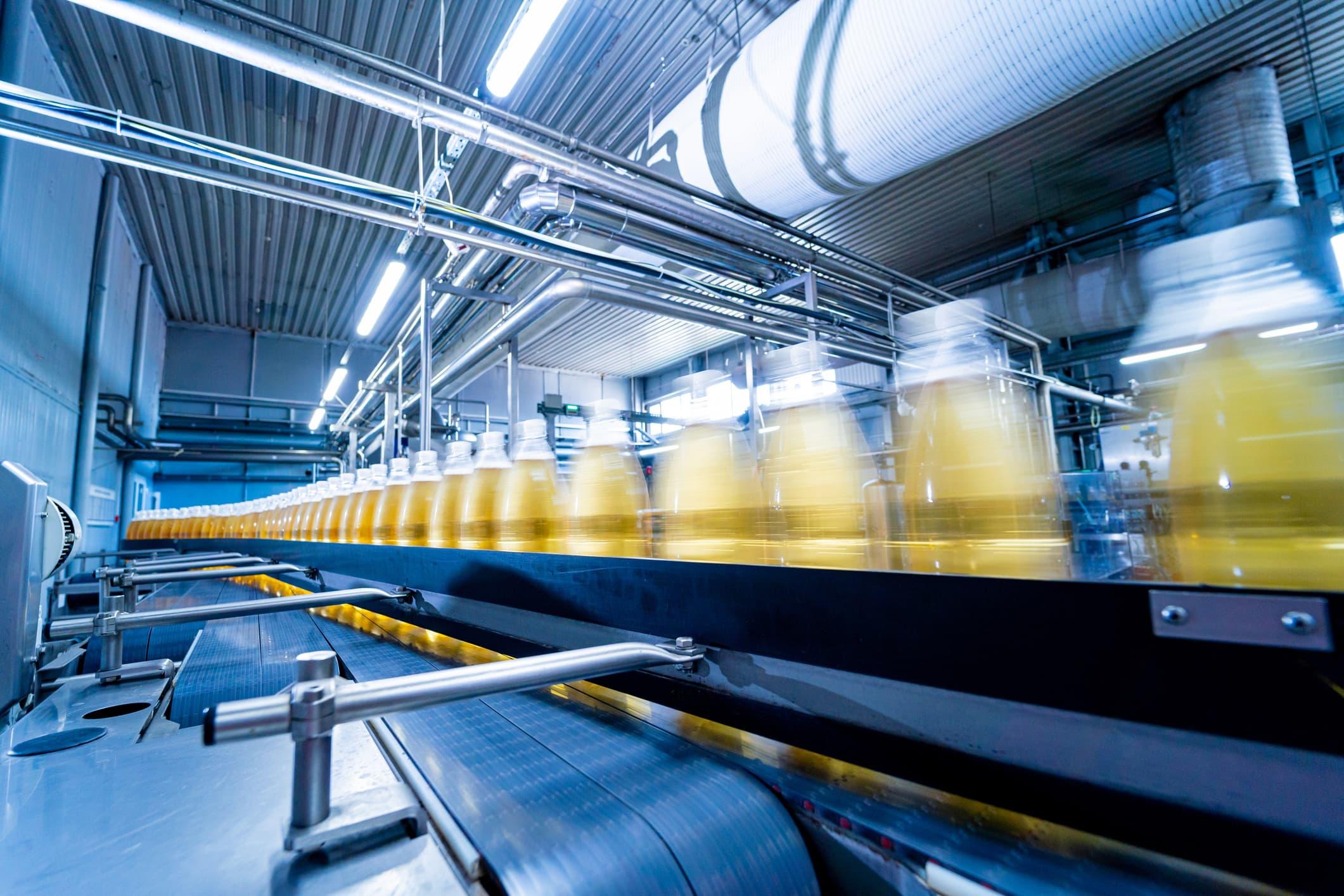
Beyond operational improvements, CIP automation delivers sustainability targets and ROI.
Automated systems reduce reliance on tribal knowledge, simplify training, and result in stable execution across sites. Standardized
CIP processes can be replicated across facilities, supporting enterprise‑wide initiatives.
By reducing downtime, resource waste, and audit friction, automated CIP systems often achieve payback within 12 to 18 months while sustaining efficiency compliance gains.
The Data Layer: Insights from CIP Automation Analytics
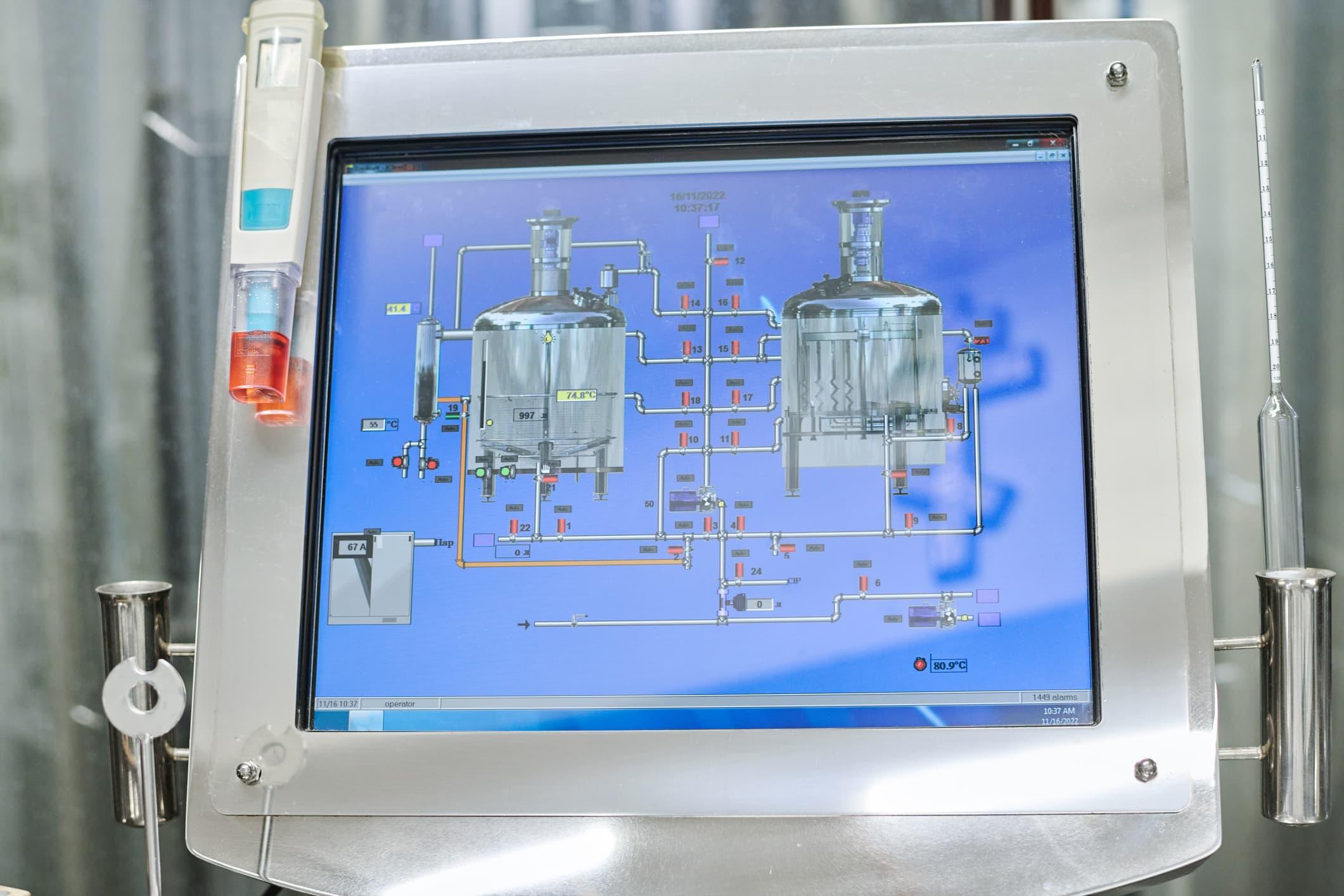
Automated CIP systems generate detailed datasets covering cycle duration, temperature flow, chemical concentration, and utility usage.
When organized through PLC controls, this data helps with benchmarking, deviation analysis, and integration with MES and quality systems.
This visibility enables targeted improvements in cleaning execution while enhancing compliance and operational decision-making.
Implementation Overview: Deploying CIP Automation
Facilities typically begin by assessing current CIP performance and identifying constraints such as downtime, excess resource use, or documentation gaps.
This evaluation helps prioritize where automation delivers the greatest operational and compliance benefits.
Key considerations include system design scalability, integration with existing controls, and validation planning.
Experienced integrators help translate operational goals into deployable automation strategies that help with compliance and long-term plant requirements.
CIP Automation Benefits for Production Uptime and Sustainability
CIP automation enhances production reliability, resource efficiency, compliance, and supplier credibility.
As sustainability reporting and audit expectations expand, automated sanitation systems provide the control and data required to meet operational and regulatory demands.
For food and beverage manufacturers planning for growth, CIP automation now functions as foundational infrastructure.
Your Process. Your Goals.
Identify the CIP automation opportunities that deliver the greatest impact.
CIP Automation FAQs for Food and Beverage Processing
CIP automation uses programmable control systems to execute and monitor cleaning cycles while generating digital performance records.
By reducing water, chemical, and energy use through controlled execution and measurable consumption data.
No. Systems can be modular and scaled to match plant size and complexity.
ROI typically comes from reduced downtime, utility savings, and audit efficiency, often within 12–18 months.
Yes. Modern systems integrate with PLCs, MES platforms, and quality systems to extend data visibility and compliance reporting.