April 6, 2026
An Integrator's Guide to Automating Food Production Systems
Automation in food production is high-stakes. From contamination control to operational resilience, integrators provide systems-level guidance for safe, scalable throughput.
How Integrators Drive Safe, Scalable, and Traceable Food Production Systems
A line slows mid-shift. A traceability record doesn’t reconcile. A contamination alert emerges hours after the product has shipped.
In food production, problems rarely stay contained. Throughput drops. Compliance risk rises. Brand vulnerability increases.
Plant managers, operations leaders, quality teams, engineers, and IT/OT directors make decisions under constant pressure. Every investment must protect output, protect safety, and protect margin.
Unplanned downtime alone drains 3-7 % of productive capacity, with some facilities losing up to 20 %, according to the International Society of Automation.
Effective food production automation reduces variability, stabilizes throughput, and reinforces traceability without compromising compliance.
System integrators see patterns that individual plants rarely notice. After years of stabilizing lines, resolving traceability gaps, and rebuilding systems under pressure, certain truths repeat themselves.
These realities shape how integrators design automation for food production.
1. Prioritize Process Over Technology
Automation exposes weaknesses. It doesn’t fix them.
When workflows are unstable, controls amplify the instability. The result is unpredictable downtime, operator overrides, and production drift. Technology layered on weak processes increases risk rather than eliminating it.
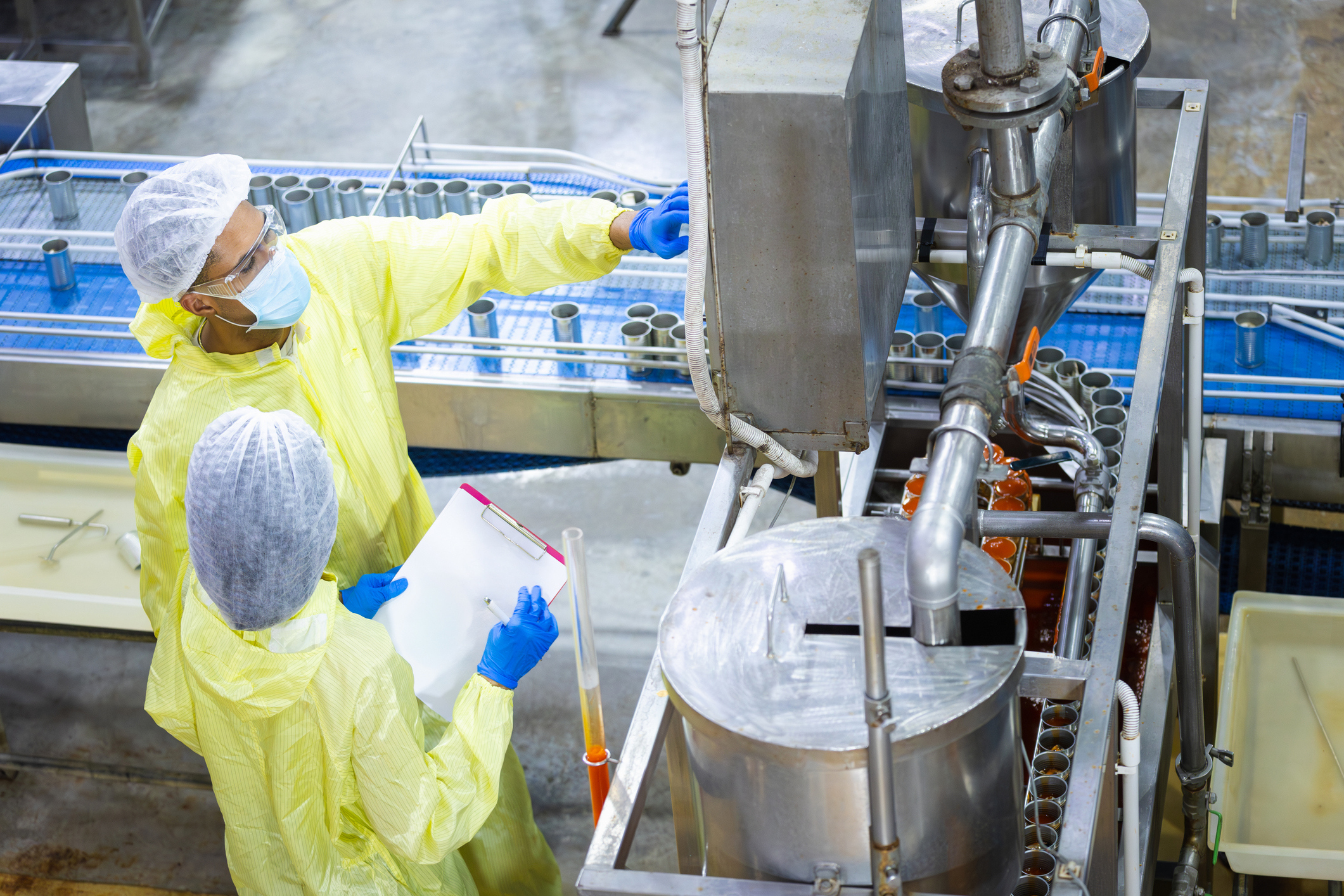
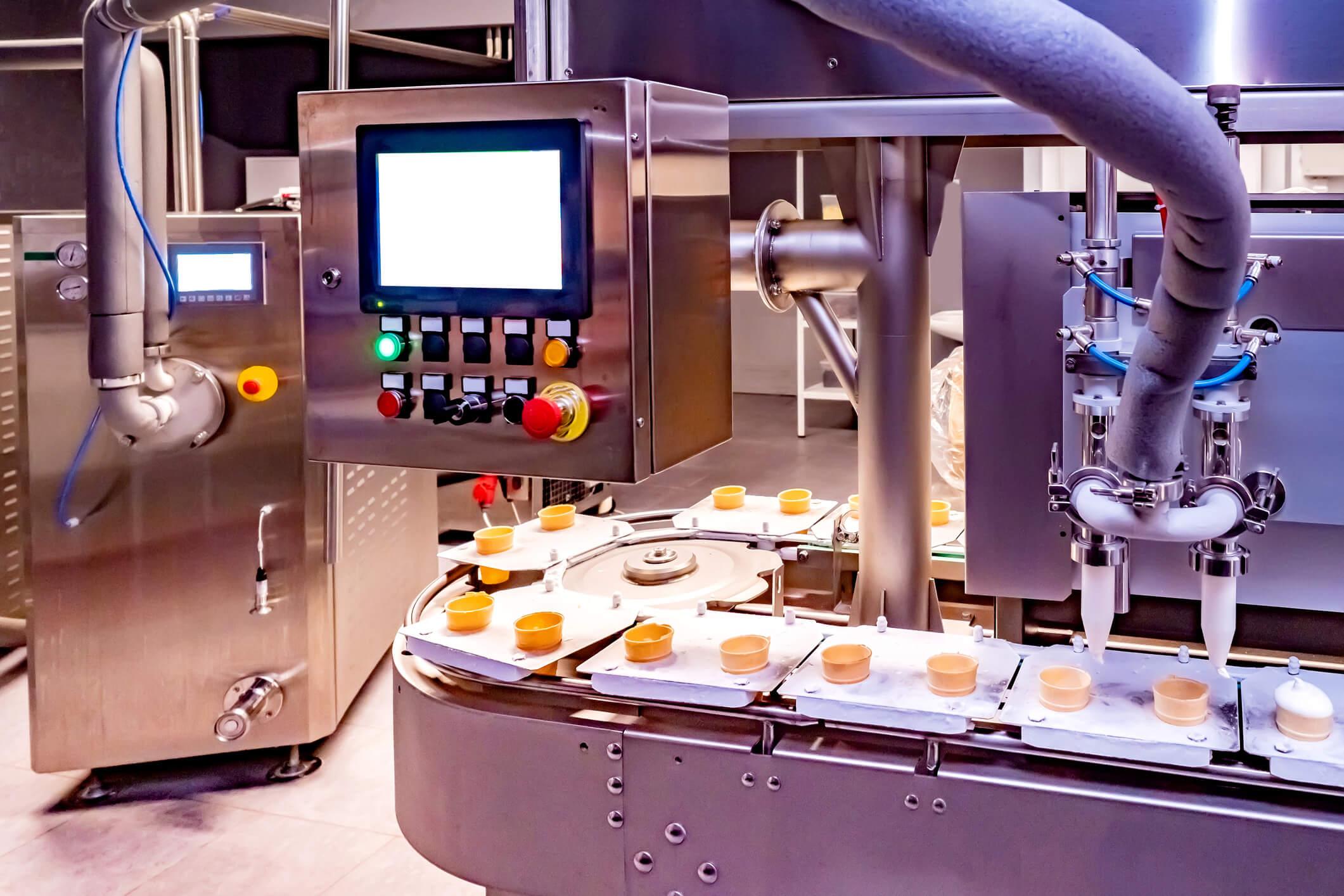
Effective process automation in food manufacturing begins with operational clarity. Hygienic design automation embeds food safety at the architectural level.
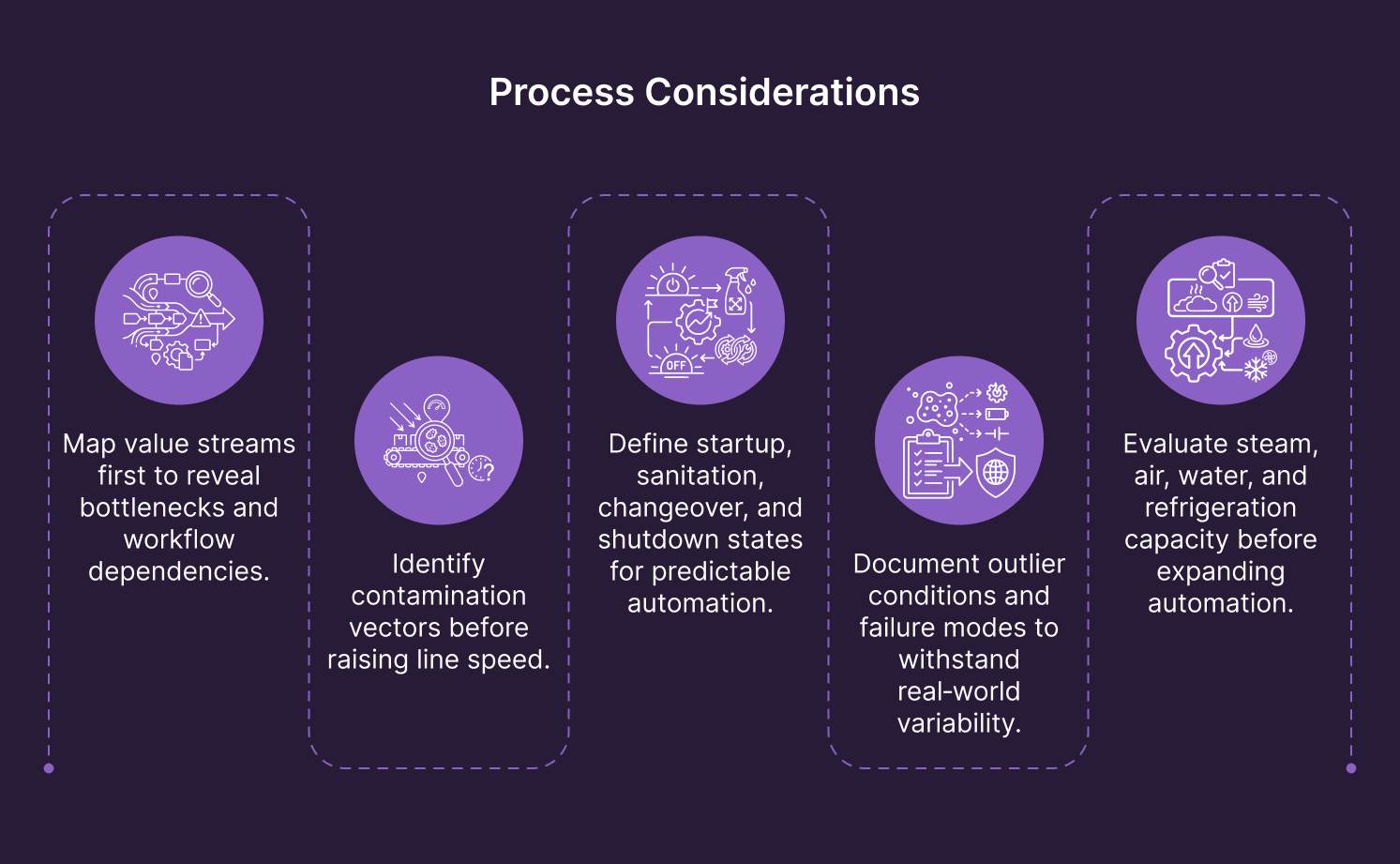
When automation aligns with process discipline, it enforces consistency. When it ignores process design, it magnifies instability.
2. Build Contamination Control into Automation
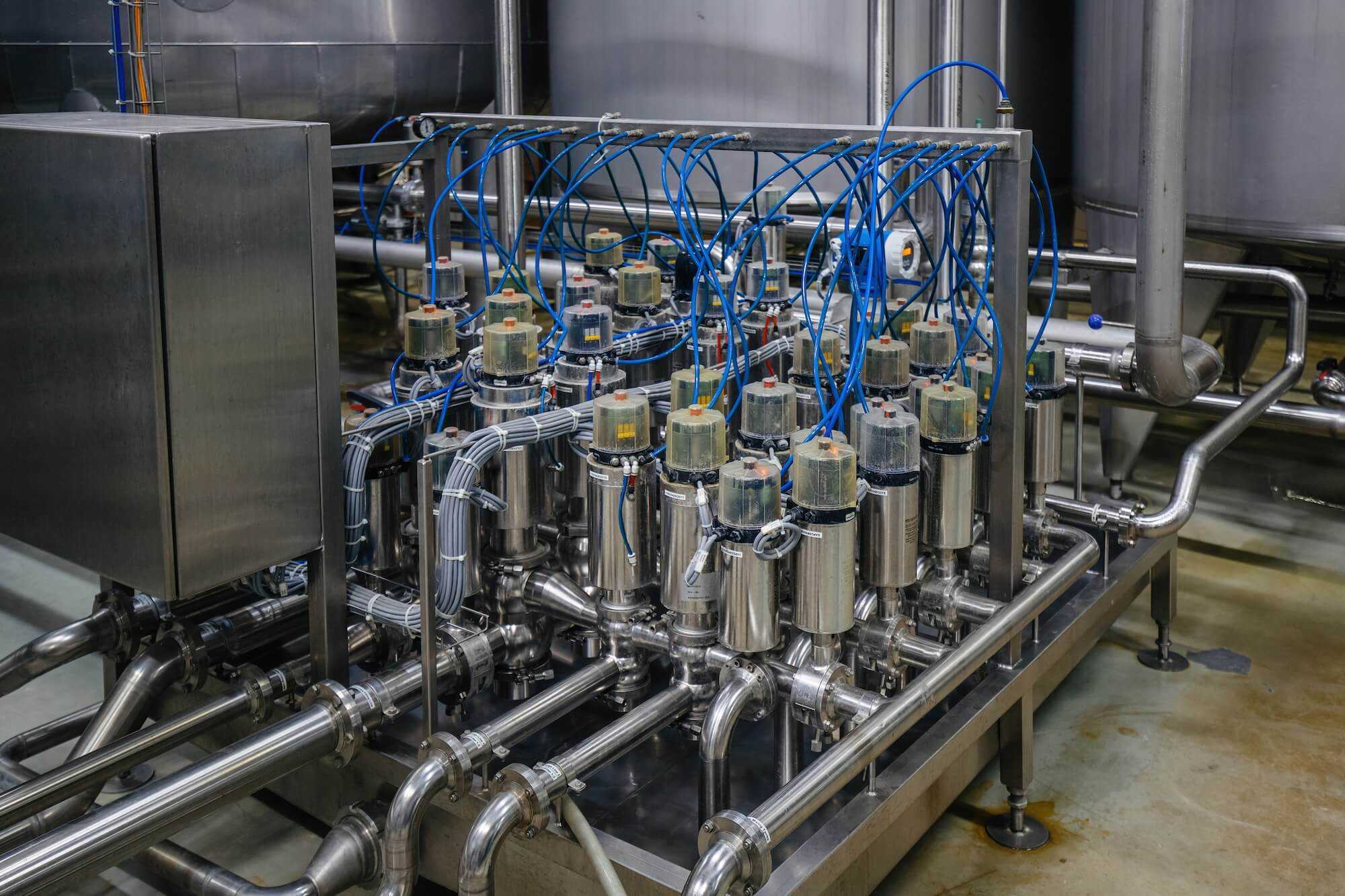
A single traceability gap can escalate quickly. Quality and food safety leaders worry constantly about traceability breakdowns and contamination risks.
Automation must be engineered to prevent incidents at the source.
Validate hygienic design before implementing control logic, segregate raw and finished zones, automate CIP systems with verification loops, rationalize alarms for contamination risk, and embed audit trails at the system architecture level.
Proactive contamination control embedded in automation protects product integrity and brand trust. When safety is not engineered upfront, plants face elevated recall risk, audit exposure, and reputational damage that extends beyond the plant floor.
3. Integrate Automation with Operator Workflows
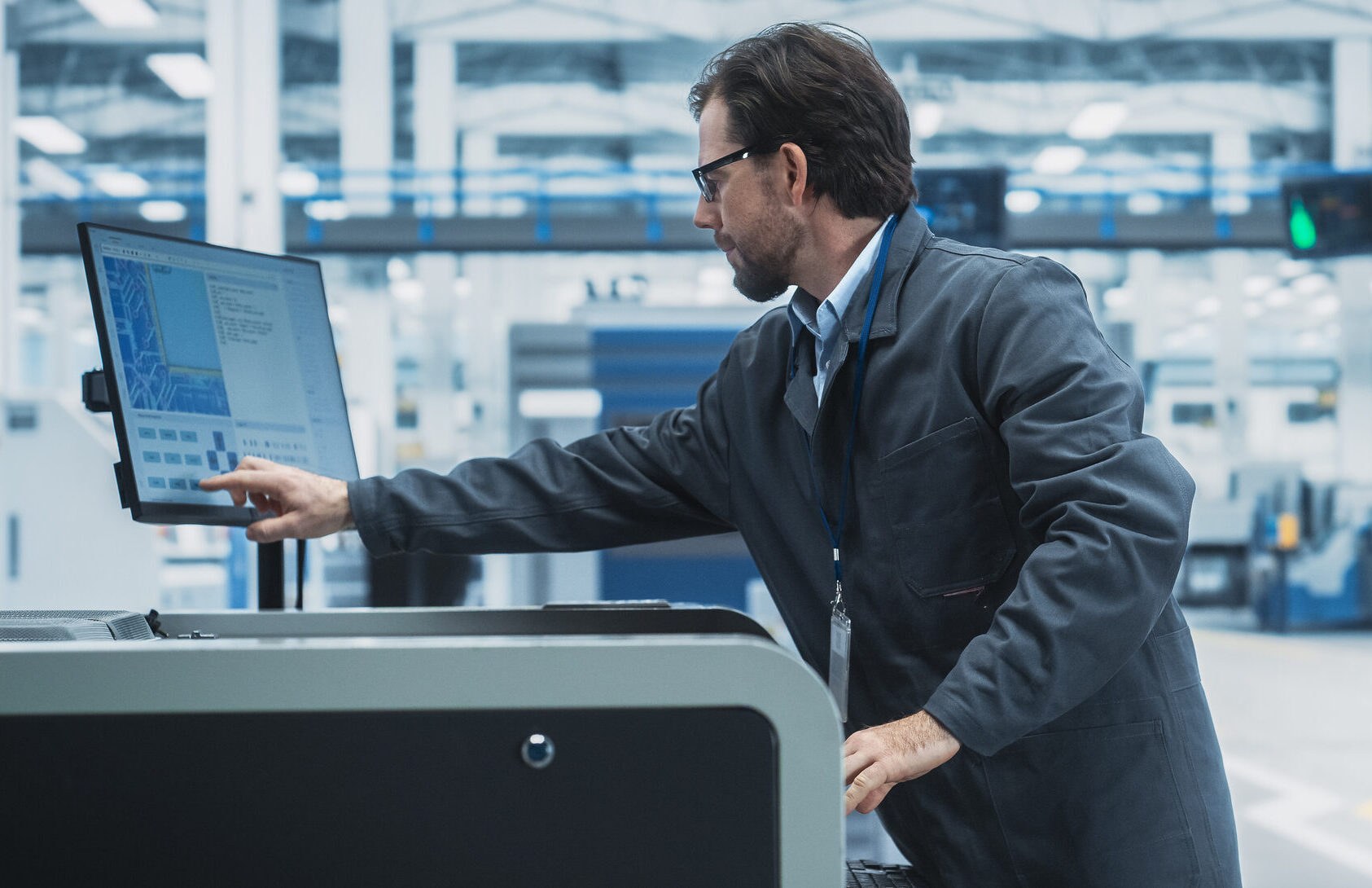
When automation clashes with real-world workflows, operators compensate in ways systems were never designed to handle. Defined operator touchpoints ensure human actions complement automated sequences without confusion.
Systems must maintain operator authority in judgment-based decisions, and HMIs must reflect actual task flows to reduce errors.
Structured change management and commissioning feedback loops reinforce adoption and surface issues before workarounds become routine.
Automation delivers the most value when it enhances human performance rather than replacing it. Systems aligned with daily operational responsibilities reduce overrides, stabilize execution, and lower operational risk under production pressure.
Human + Automation Integration
- Improves plant reliability, efficiency, and safety
- Aligns automation with real-world human workflows
- Drives consistent, repeatable production
- Preserves flexibility during unexpected conditions
- Strengthens collaboration between operators and technology
4. Plan Data Architecture for Food Plants
Inconsistent data undermines confidence in every operational decision. Reliable data underpins safe, efficient, and traceable food production. A disciplined food plant data architecture ensures information flow, enforces compliance, and enables actionable insight.
Integration experts, like EOSYS, implement structured data practices so governance becomes foundational rather than reactive.
Key Data Architecture Actions
- Define the system of record so ERP, MES, and SCADA share consistent data across the plant.
- Establish naming conventions and tag governance to prevent ambiguity and reporting errors.
- Plan network segmentation and cybersecurity measures to protect production assets.
- Build traceability from raw intake to finished product to maintain compliance and simplify audits.
- Enable cross-functional analytics access so operations, quality, and leadership teams act on reliable information.
A strategically designed data layer converts isolated automation into coordinated operational control. Without disciplined architecture, reconciliation delays, audit exposure, and reactive firefighting become inevitable. With it, leaders gain visibility, faster decisions, and defensible compliance.
EOSYS demonstrated this approach in a yogurt facility integration project, where unified batch control and standardized Ethernet communications supported end‑to‑end traceability and simplified audit readiness.
5. Design Automation to Handle Variability
Food plants rarely operate under predictable conditions. SKU changes, seasonal demand, ingredient variability, and utility fluctuations place constant strain on production systems.
Effective industrial automation for food and beverage accounts for these conditions at the architectural level to sustain performance as inputs and volumes change.
Downtime risk requires equal attention. Treating failure solely as a maintenance issue leaves plants exposed to cascading disruptions.
Resilient design incorporates redundancy at critical control points, integrates predictive maintenance signals, and validates system performance under simulated fault conditions. Proactive downtime risk mitigation protects throughput and continuity.
Modular system architecture further enhances reliability. Standardized components, scalable line segments, and flexible control strategies allow plants to expand capacity, introduce new products, or reconfigure production without destabilizing operations.
Engineered Flexibility Pays Off
- Stable production
- Reduced risk exposure
- Long-term operational reliability
When variability tolerance, redundancy planning, predictive insight, and modularity are engineered together, automation maintains output under pressure.
6. Create Flexible Modular Automation Systems
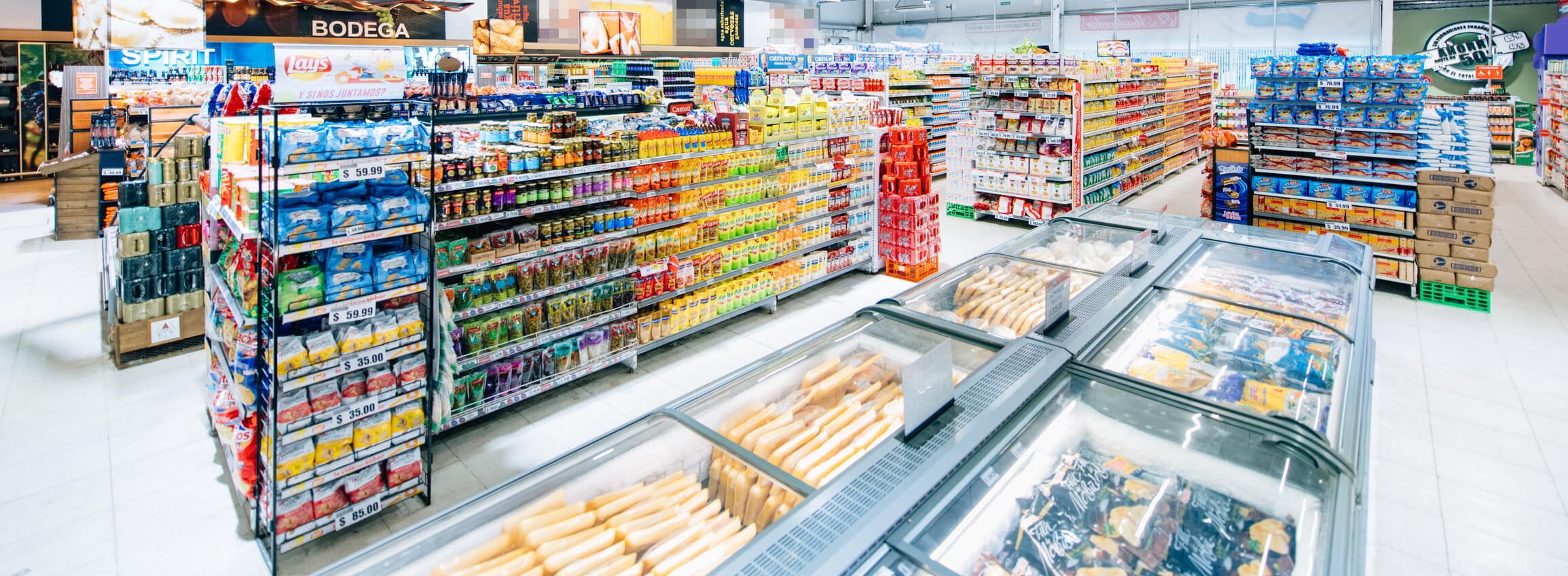
Production demands rarely stay static. As product variety expands and volumes change, rigid systems quickly become constraints. U.S. research from NIST shows that modular and flexible automation architectures help plants scale production, adapt to SKU changes, and reduce disruption during expansion.
Integrators design repeatable, flexible automation cells that support SKU complexity management while accommodating both current operations and future growth.
Key Modularity Actions
- Standardize control panels to simplify maintenance, reduce errors, and accelerate deployment.
- Implement repeatable automation cells to ensure consistency across lines and sites.
- Design a scalable network topology to accommodate plant growth and additional production nodes.
- Enable flexible recipe management to handle SKU complexity without disrupting operations.
- Use modular instrumentation and equipment layouts to support rapid changeovers and expansions.
Flexible modular automation reduces downtime during expansion and fortifies adaptability. Without modular design, growth introduces instability. With it, plants gain scalability, resilience, and a foundation for long-term performance.
7. Align Automation with Business Strategy
Automation investments carry strategic consequences. When technical decisions operate in isolation from business objectives, ROI erodes. Food processing automation strategy ensures investments reinforce growth, margin protection, and competitiveness.
Integrators link technical architecture to executive priorities so automation delivers measurable operational and financial outcomes.
Key Business Alignment Actions
- Plan for growth trajectory by evaluating new SKUs, increased volume, and future product lines.
- Consider geographic expansion to ensure systems support multiple sites and regional requirements.
- Manage private-label and product-mix variability to maintain efficiency amid changing demand.
- Conduct regulatory horizon scanning to anticipate compliance requirements and minimize risk.
- Perform lifecycle cost analysis to optimize capital allocation and maximize long-term return.
Aligning automation with business goals prevents misallocated capital and fragmented execution. When operational and executive planning move together, automation reinforces profitability, scalable growth, and compliance.
8. Approach Automation as a Phased Process
Treating automation as a one-time capital project creates short-term gains and long-term instability. Sustainable performance requires organized progression. Food manufacturing system integration enables plants to advance deliberately from stabilization to predictive control while preserving clarity and compliance.
Integrators structure each phase so investment translates into measurable improvement.
Phased Automation Actions
Phase 1 Stabilization and Visibility Establish reliable processes, system transparency, and consistent performance standards. | Phase 2 Standardization and Integration Connect equipment, workflows, and data streams to power predictable execution. |
Phase 3 Optimization and Predictive Control Apply real-time insight to increase throughput and reduce operational risk. | Phase 4 Enterprise Data Leverage Expand analytics to support executive decision-making and strategic planning. |
A phased structure protects operational stability while enabling advancement. Without progression, systems stagnate or fragment. With it, automation boosts safety, traceability, and throughput across people, processes, and technology.
9. Prepare Teams and Governance for Automation
Technology alone does not secure performance. Governance gaps, unclear ownership, and weak cybersecurity introduce vulnerabilities that automation cannot compensate for.
Food plant cybersecurity and structured organizational processes ensure systems operate securely, efficiently, and in compliance. Integrators align leadership, workflows, and vendor coordination while managing utility dependencies to ensure operational continuity.
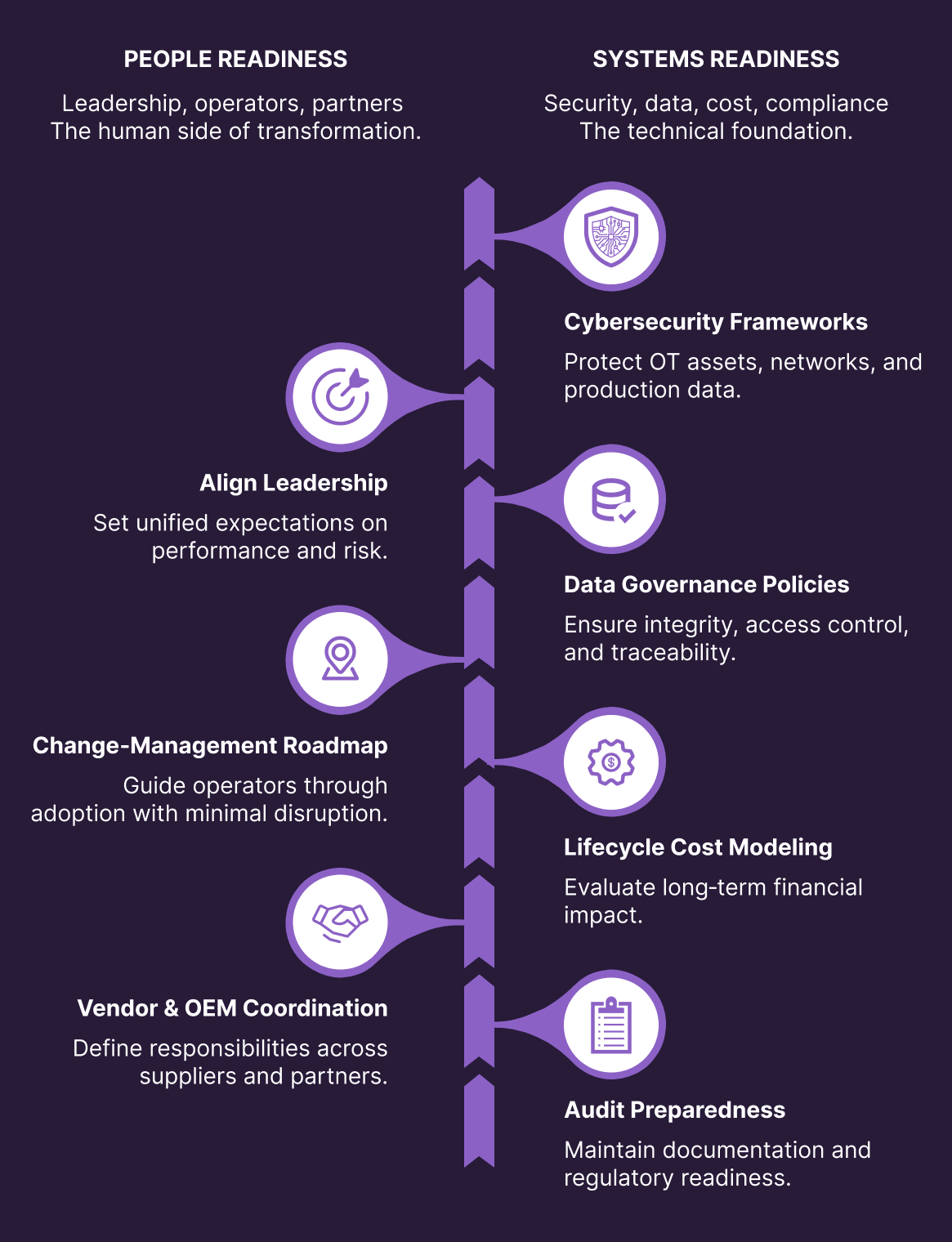
Key Organizational Readiness Actions
- Align leadership around automation goals – Ensure executives and plant managers share clear performance and risk expectations.
- Develop a structured change management roadmap – Guide operators through adoption to minimize disruption.
- Coordinate vendors and OEMs – Clarify responsibilities across suppliers and automation partners.
- Establish cybersecurity frameworks – Protect operational technology, networks, and data.
- Implement data governance policies – Maintain traceability production data integrity.
- Perform lifecycle cost modeling – Evaluate long-term financial impact.
- Plan audit preparedness – Maintain documentation and regulatory readiness throughout the lifecycle.
Preparing teams and governance in parallel with deployment reduces operational exposure and protects system reliability. When organizational readiness matches technical capability, automation delivers durable value.
In one automation project, EOSYS helped a global manufacturer accelerate time‑to‑market by transforming loose design concepts into manufacturable prototypes.
Condensed layouts and optimized configurations created a scalable foundation for a new product line while strengthening vendor alignment.
10. Select an Integrator Who Aligns with Strategy
Selecting the wrong partner creates friction that persists long after commissioning. The right food plant automation integrator prioritizes process integrity, scalability, and contamination control while coordinating vendors to maintain performance consistency.
Integrators who align technical architecture with strategic goals deliver measurable operational and financial impact.
Key Integrator Selection Actions
- Prioritize process over product – Evaluate workflows and safety requirements before recommending equipment.
- Assess contamination and downtime risks early – Identify vulnerabilities that affect quality, throughput, or compliance.
- Design scalable architecture – Confirm systems can expand with production and SKU growth.
- Coordinate across OEMs and vendors – Manage suppliers to ensure smooth integration.
- Provide lifecycle support beyond commissioning – Offer training, maintenance, and optimization.
- Align technical decisions with business strategy – Reinforce growth objectives and compliance.
Selecting the right integrator determines if automation bolsters the enterprise or becomes another siloed system. Strategic alignment produces resilient, traceable, and scalable production performance.
Survey findings showed automation maturity varies widely, with system integrators and suppliers often more advanced than manufacturers. The study emphasized governance and planning as critical to overcoming cost and resource constraints.
Achieving Operational Integrity Through Automation
Operational integrity is measured in throughput stability, traceability confidence, and regulatory readiness. Food production automation enables fault-tolerant performance while maintaining output under scrutiny.
Integrators like EOSYS coordinate processes, people, data, and infrastructure so automation aligns with operational and strategic objectives.
When automation follows structured progression and integrates process discipline, data architecture, and human workflows, plants achieve predictable, scalable production. Systems that embed traceability in food processing protect product integrity and create durable operational resilience.
FAQs on Food Production Automation and Traceability Systems
Automation embeds contamination control and traceability directly into system architecture. Verified CIP cycles, audit-ready documentation, and real-time monitoring reduce compliance gaps and prevent minor issues from escalating into recalls.
No. Throughput alone does not guarantee return. Automation aligned with food safety controls and process integrity stabilizes output and protects margin, while speed without discipline increases risk exposure.
Modular automation systems may require higher upfront investment, but they reduce downtime during expansion and support SKU complexity without destabilizing operations. Gradually, that flexibility protects capital and limits rework.
No. End-to-end traceability requires integrated automation, organized data architecture, and governance discipline. MES without synchronized controls and verified data creates visibility gaps.
Automation changes operator roles by reinforcing consistency and reducing manual variability. Systems engineered for plant workflows enforce execution consistency and operator accountability.
Downtime often reflects architectural design decisions. Redundancy planning, predictive maintenance integration, and fault validation determine whether disruptions remain isolated or cascade across production.
Compliance must be engineered into system design. Retrofitting traceability and contamination controls after deployment increases cost and leaves residual risk.
Automation is a structured progression. Phased integration ensures scalability, operational stability, and long-term strategic alignment.