August 13, 2026
AI Worked in the Demo. Then it hit the floor.
Most manufacturers are investing in AI. Few are getting anything back. The foundation is why.
The email arrives on a Tuesday. The subject line is something like "AI roadmap update," and it comes from the top. You read it the way you read something you’ve been expecting and dreading: leadership wants a strategy ready by the next quarterly review. Timelines. Use cases. Projected returns.
You close the laptop and look at the operation below you through the window. Data historians that have not been updated in six years.
A SCADA system running on hardware that the vendor stopped supporting before the pandemic.
An MES that generates reports the engineering team trusts and the business team questions because the numbers never quite match.
Somewhere in that tangle of aging infrastructure, disconnected systems, unsupported hardware, and a workforce that has never been asked to trust a machine's judgment, you are expected to build an AI strategy. But nobody has defined who owns it when something goes wrong.
Am I Ready?
It is the question most manufacturers skip on the way to an AI strategy.
Readiness means the data flows, the systems connect, the hardware holds, the governance exists, and the people are prepared.
AI depends on these conditions.
Resource
E-Guide | Am I Ready
This is the position many manufacturing operations leaders find themselves in right now. Pressure from above. An operation that was not built for what is being asked of it.
The space between those two realities is the AI Readiness gap. Call it AIR Space. It is where most initiatives stall before they start.
Most operations are living in it right now. Few know how wide it is.
Most Manufacturers Invest in AI.
Few Get Much Back.
Most manufacturers expect AI to rank among their top three margin contributors.
Only 21% have the foundation to deliver it.
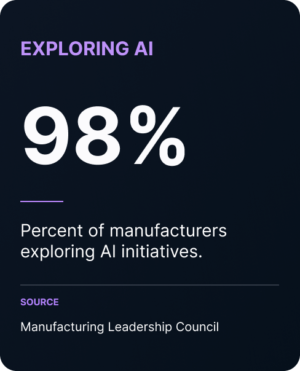
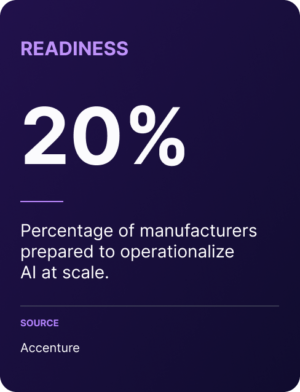
A separate survey found 98% are exploring AI. Yet only 20% are prepared to operationalize it at scale.
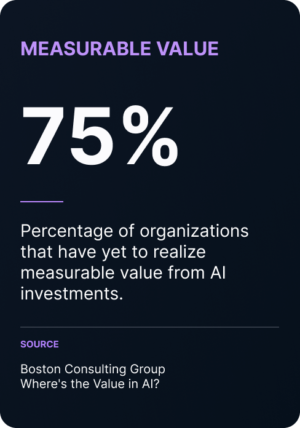
The outcome data is worse. Three-quarters of companies have yet to show tangible value from their AI investments. Not struggling to scale.
Not underperforming expectations.
That’s a zero return, at least not yet.
These are not reluctant adopters of manufacturing AI. They committed. They moved. The results did not follow.
The problem is not the AI initiative. It is often the condition of the operation before the initiative starts.
The VP fielding the leadership's AI mandate and the plant manager trying to deliver it are looking at the same gap from opposite ends.
Most manufacturers launch AI on infrastructure that was never built to support it: data that cannot be accessed without manual effort, systems that do not talk to each other, control hardware past its useful life, and no governance structure to manage what happens next.
The initiative is not the variable. The foundation is.
Why Manufacturing AI Initiatives Stall
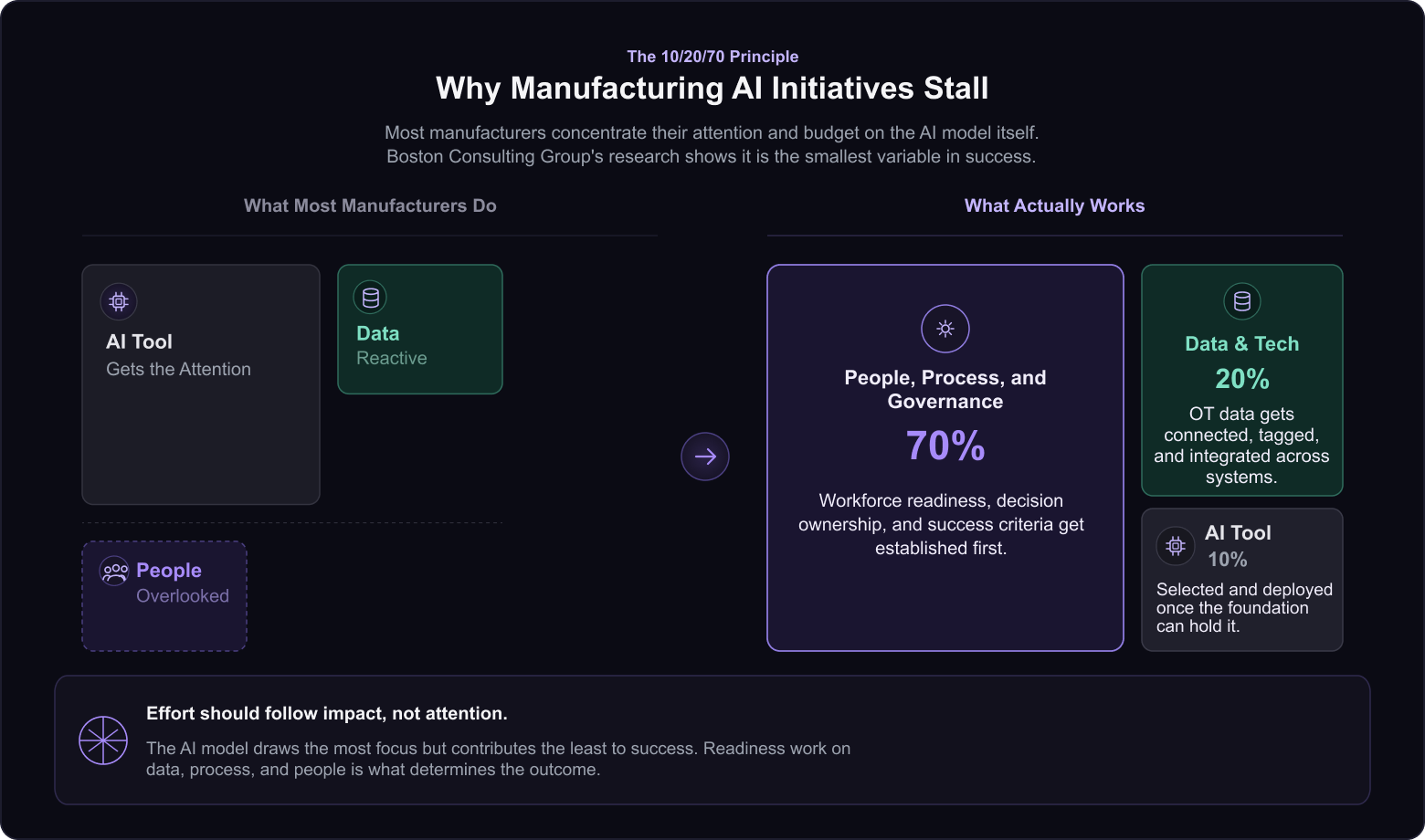
 The AI model is where the excitement lives. It gets demoed, budgeted, and featured in every strategy presentation. It is also the least important variable in whether an initiative succeeds.
Most manufacturers pour their attention and budget into the part that matters least.
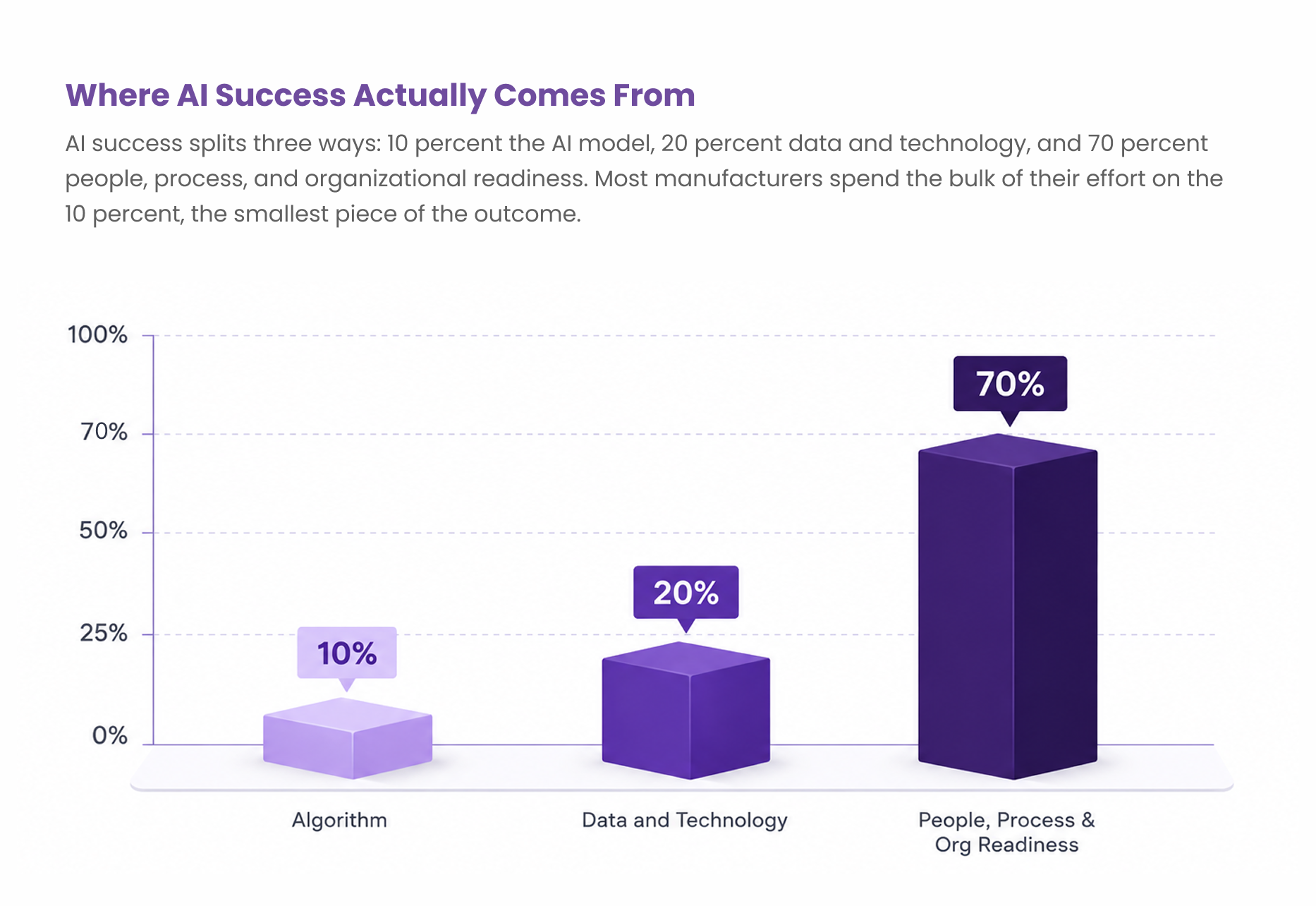
The 10/20/70 formula, drawn from Boston Consulting Group's study of AI implementation across hundreds of companies, provides a framework for why: 10% the AI itself, 20% data and technology, 70% people, processes, and organizational readiness.
That is where most initiatives lose.
Chase Davis, Director of Technology at EOSYS, points to a specific blind spot.
"They maybe think they have high-quality data when they might not. The collection mechanism may be set up to miss important events, or set up so junk data isn't filtered out, and it takes more effort to clean it out." – Chase Davis
Leadership Wants an AI Strategy. Your Operation Needs Something Else First.
Most manufacturers are asking the wrong questions. They all boil down to: “When do we do AI?”
The question that changes the outcome is different: Is our operation prepared for what is being asked of us?
The first question assumes the technology is the constraint. The second question looks at the operation and asks whether it can handle the proposed work.
The mandate is not wrong.
The starting point usually is. Most strategies begin with vendor selection, use case prioritization, and platform decisions before anyone has asked whether the operation can support what is being proposed. That is a plan built on an untested assumption.
The first question any AI strategy has to answer is the one most skip: Am I ready?
If the answer is no, or even uncertain, the strategy has work to do before any initiative launches. That work is assessing the operation across the dimensions that determine whether AI can deliver anything: data infrastructure, IT/OT convergence, control system condition, governance, and workforce capability.
That assessment is not a detour from the AI strategy. It is the foundation of one worth building.
Get that answer first. Everything else flows from it.
Chelsea Ellis, Engineering Project Manager at EOSYS, says the difference comes down to one thing.
“It all goes back to that buy-in. When the company has a culture that adapts to new technologies and wants to invest for the right reasons, those are the projects that are successful. When they're forced into it because things are outdated or starting to break, and there isn't that culture of investing, those are the ones we struggle to have success with."
– Chelsea Ellis
A Prepared Operation Pays Off Before AI Arrives
AI does not create value on its own. It runs on data, systems, people, and processes that are prepared to support it. Most manufacturing operations are not there yet.
That is not an argument against AI. It is an argument for getting the operation ready to handle it.

Being ready means OT data that flows without manual extraction. Historians, SCADA, and MES systems that exchange data without a person in the middle. IT and OT operating under shared standards rather than workarounds.
Control hardware capable of meeting AI's requirements. Operators who understand what AI recommendations mean and trust them enough to act. A governance structure that names who owns the decision when something goes wrong.
When those conditions exist, the return does not wait for AI to arrive.
Zach LaDouceur, Digital Transformation Sales Leader at EOSYS, puts it plainly.
"It doesn't make sense to just digitize a bad process. You should fix the process first, then deploy a solution on top of it." – Zach LaDouceur
The Payoff Before AI Arrives
- Decisions that took days take hours
- Engineering teams act on data instead of managing it
- Downtime events surface before they reach the customer
- Quality deviations appear in the data before they become complaints
That is what a prepared operation looks like. It is also what AI needs to deliver anything worth measuring.
What Separates Manufacturers Who Get ROI From Those Who Don't
The manufacturers making progress toward AI readiness tend to share a common behavior.
Before committing to a direction, they take a hard look at the operation's condition. The systems. The software. The people who use them.
They ask someone with firsthand knowledge of the operation what it can realistically handle.
Not what the architecture diagram says.
Not what the vendor assessment estimates.
Then they ask the question that changes everything: Am I ready?
Steve Orth, VP of Engineering at EOSYS, has seen this distinction matter.
"People who think they can just apply AI as a hammer and solve all their problems are foolish. They've first got to get their data in order. That's where an integrator can help. Then they can go use AI to solve the hard problems."
– Steve Orth
You Do Not Have an AI Problem. You Have a Readiness Problem.
If you are sitting between leadership’s AI expectations and your operation's current state, those are not the same situation. And they do not have the same solution.
Those are different enough that the solution changes depending on which one you address.
Readiness means OT data that is accessible, clean, and tagged in a way that means something to both engineering and the business.
The question is not whether you think your operation is ready industrial AI.
It is whether you know you’re ready.
It means IT and OT operating under shared processes, security standards, and planning cycles rather than as separate environments that occasionally exchange files. It means control hardware capable of handling the additional load AI requires.
It means someone owns the decision to scale, stop, or adjust an initiative once it starts. And it means the people responsible for running the operation understand what AI is asking of them and are prepared to act on it.
That is what ready looks like.
Most operations are not there yet. The ones making progress know which gap to close first.
These are not checkboxes. They are diagnostic signals. Each one helps identify where the work starts and what changes will create value before AI enters the picture.
The question is not whether you think your operation is ready for industrial AI.
It is whether you know you’re ready.